"EACH DISCOVERY REVEALS A NEW DIMENSION TO YOUR LEGACY"
THE UNFOLDING JOURNEY is a new blog written in association with Legacy Genealogy.
This blog is a blend of disciplines that reveal the rich texture of culture and history that surrounded your ancestors' lives, as well as your own. We will take you beyond just the names, dates, and places to give you the "back story" for the reasons your ancestors thought what they thought and did what they did. We invite you to also visit us at the Legacy Genealogy facebook page at http://facebook.com/legacygenealogy
“Early on the morning of March 29th, 1862, our brigade was in line, ready for the long-expected move. Heretofore we had marched by brigades, but this morning the whole of the 6th division, consisting of three brigades of infantry, one regiment of cavalry, and several batteries of artillery, were ordered to move together. In the rear of the division was a battery of heavy siege-guns, each piece and caisson being drawn by ten horses. Immediately in the rear of the artillery were the trains, in the following order: First, wagons belonging to division headquarters; second, baggage wagons of the different brigades, in the order in which they marched; third, supply and ammunition trains for the division, consisting of two or three hundred wagons. Thus it will be seen that the troops of our division, alone, with their trains, will occupy a road several miles in length.
“The country through which we were now traveling was delightful. Some of the finest scenery in the southern states may be found in Middle Tennessee. Fields, orchards, and meadows were covered with the verdure of early spring. Peace and plenty reigned on every hand; and were it not for the warlike columns, dressed in blue, moving slowly along the road, one could hardly believe that the desolating cloud of war was even then hovering over this beautiful scenery.
“As the different brigades arrive upon the campground they are shown to their camps by the division commander, or members of his staff, and the regiments by commanders of the brigades, until all have been assigned a stopping place for the night.
“Now a lively scene occurs - the bustle of men, as they hurry to and fro, unloading wagons, pitching tents, carrying wood and water, building fires, grinding coffee; loud talking, neighing of horses, braying of mules, and, above all, the sharp, shrill notes of the cavalry or artillerymen’s bugles, as they sound the call to ‘water and feed’ ring out upon the gentle evening air, with a strange and mingled chorus.
“At night the encampment is brightened by the hundreds of camp fires and lights in the tents, until, from brigade headquarters, comes the sound of the ‘tattoo’ which is immediately taken up by the bugler in each regiment and battery. Half an hour later, ‘taps’ are sounded, lights are put out, and all is still.
“We are up early on Sunday morning preparing for the march. The brigade which yesterday marched in front today takes the rear. The entire division is on the road by 7 o’clock, and by noon we have traveled as far as all day yesterday. Then the dust and heat become oppressive. Each man carries from forty to fifty pounds. As the march continues, the men commence to lighten their loads by throwing away all surplus clothing. Bed-quilts, blankets, and even overcoats, are thrown aside, with every article, not essentially necessary to be carried. The pleasant march of the morning becomes a weary and harassing toil long before the close of day. It is no longer the mud that hinders us, but marching under heavy loads, over the stony pike, with blistered feet, and the blinding dust which almost stops our breathing.”
(Middle Tennessee, Fourth week of March, 1862)
Excerpts taken from “Annals of the Fifty-Seventh Regiment, Indiana Volunteer Infantry: Marches, Battles, and Incidents of Army Life” written by Asbury L. Kerwood immediately after the war.
During the final weeks of World War II in Europe, as Allied armies swept across a battle torn Germany, two teams of the world’s leading nuclear scientists were desperately at work. One team in the New Mexico desert hastening to assemble the atomic bombs that would be used later in the summer; the other team, a group of Nazi-sponsored physicists and technicians in southern Germany struggled to build a critical, self-sustaining nuclear reactor.
The Race for the Bomb
Nuclear fission was discovered in Germany in 1938. By the beginning of World War II, the international scientific community was well aware of the early German lead in this area of nuclear physics. History confirms that the German nuclear project was about two years ahead of Britain, France, and the United States.
All German atomic discoveries were declared secret by the Nazi Government and were turned over to the Army Weapons Office in Berlin. There was no doubt that Hitler was only interested in one thing. He wanted an atomic bomb. Many of the most prestigious German scientists were involved with the project including Werner Heisenberg, Otto Hahn, Max von Laue, and Carl von Weizacker. Three of these four principal men were Nobel Laureates in Physics or Chemistry. They were gathered in one place, given adequate resources, and expected to produce the ultimate weapon for the Fuhrer.
By 1943, Allied air raids on Berlin were becoming so intense that work could not be done there. An area was sought which was still relatively free from bombings. Southwest Germany had largely been spared from such attacks so far, and in the event of occupation, Soviet troops were not expected to penetrate into this area. A proposal was made to relocate the nuclear project to a narrow limestone valley along the Eyach River. The cellar of a local church had been cut out of the rock below it, and a small reactor could be constructed there.
The Alsos Mission
As the work of the Manhattan Project scientists, under J. Robert Oppenheimer, progressed, it became reasonable to assume that Germany was on the same path. Years earlier, Albert Einstein had cautioned President Roosevelt that this would happen.
The Director of the Manhattan Project, Gen. Leslie R. Groves, developed the idea for a covert mission to find the German scientific team before they could provide Hitler with atomic power. The mission was to acquire all available German research and materials (including uranium), capture any scientists involved with the German project, and destroy any reactor facilities if possible.
It was called the “Alsos Mission” and was under the control of Manhattan Project personnel. “Alsos” is a Greek word ironically translated as “groves.” The Alsos Team in the field was co-directed by two men, Col. Boris T. Pash and Dr. Samuel A. Goudsmit. The mission staff included seven military officers and 33 scientists. Boris Pash was a highly effective military intelligence officer who was the head of security for the Manhattan Project and was the chief military leader of the mission. Samuel Goudsmit was a well known Dutch-American physicist and archaeologist and was the leader of the mission’s scientific team.
Information and documents captured at Strasbourg University in 1943 indicated that the remaining German center for research into the production of an atomic bomb was located at the small town of Hechingen, a few miles outside of Stuttgart.
In April of 1945, the covert task force of scientists, soldiers, and secret agents were sent into Germany to follow in the wake of the U.S. Army’s advance. The plan was for the Alsos team to accompany General Brooks’ VI Corps in its drive to cut the roads south of Stuttgart. Afterwards the team would make a dash for Hechingen, escorted by infantry detached from the Corps.
Secret Mission in Bavaria
General Alexander Patch, Commander of the U.S. 7th Army, with one armored division and three infantry divisions was attacking toward Stuttgart. The drive was supposed to be coordinated with General de Lattre’s First French Army coming up to attack through the Black Forest. Once Stuttgart was taken, it would be administered by the U.S. Military Government, as the city would be part of the American Zone of Occupation. But urged on by Charles de Gaulle, de Lattre was driving all out for Stuttgart. French prestige demanded that the major German city of the area should be taken by a French Army.
Unknowingly, the French were endangering the highly secret American effort to find the German nuclear scientists - the Alsos Mission, whose job it was to capture German scientists and material relating to German nuclear fission.
Eisenhower had ordered that on no account should the German scientists and their research data fall into French hands. He and the American government wanted the atom bomb, being prepared for the war against Japan, to remain a monopoly of the Anglo-Americans. On April 19th, Eisenhower heard from his intelligence sources that de Gaulle had ordered de Lattre to take and hold Stuttgart “until such time as the French Occupation Zone had been fixed.” On that same day French forces captured Stuttgart. What was the Alsos Team going to do now?
The thought of the French obtaining the key nuclear fission information and capturing the chief scientists sent a shiver down the backs of Eisenhower and George Marshall. General Groves, who was in charge of the U.S. atomic research project, distrusted the French nuclear scientists intensely. There were open Communist sympathizers throughout France and Madame Joliot-Curie, the leading French scientist, was thought to be a Communist. The Americans thought that she would simply hand over the captured German material to the Russians on a silver platter.
American Gen. Jacob Devers, 6th Army Group commander and technically the superior officer for de Lattre, threatened to cut off supplies to de Lattre if he did not relinquish Stuttgart. Eisenhower tried to cool the situation by writing de Gaulle and deploring de Lattre’s ongoing defiance of Dever’s orders, but assuring him that supplies would not be impeded. Even though most of the ranking military figures knew nothing about the Alsos mission, they were told that the American occupation of Stuttgart was considered an extreme high priority.
Behind the scenes there was near panic at Supreme Headquarters. Secretary of War Stimson and General of the Army Marshall planned a campaign which would authorize a reinforced U.S. Army corps to cut right through the French zone of operations to take and hold Hechingen, whether the French liked it or not. Cooler heads prevailed, however.
The French Connection
Under the command of Pash, the team, reinforced by an escort of combat troops from the Seventh Army, set off to cross French territory, without French permission, to reach the German scientists at Hechingen. Pash, a bold and imaginative soldier, bluffed his way across the first bridge in his path which was guarded by de Lattre’s soldiers. He made a long, long speech to the officer in charge about how proud General Devers was that the French had captured this particular bridge and how Devers was sure that they would hold it against all odds. Then while his interpreter very slowly translated the speech into French, Pash quietly led the rest of his column across the bridge. Before the French realized the fact that they had been tricked, the Alsos team and its escorts had vanished down the road.
A little later, Pash was caught up to by a French officer in a vehicle. He thought that the Americans were heading for Sigmaringen, where Marshal Petain and the rest of the German-aligned Vichy Government had fled the previous year. Pash assured the Frenchman eloquently that he was not about to butt into their affairs. The capture of Petain and his traitors was strictly a matter for the French. Pash was allowed to continue. The miles passed as the column moved down the dusty spring roads which had yet to see an Allied soldier. Within sight of Hechingen, Pash stopped for a while and then signaled to the nearest French Headquarters that the French should stay out of the area for a few hours, “because it is soon to be subjected to a heavy bombardment by American artillery.”
On the morning of April 24th, while the French hesitated, Col. Pash and his men moved into Hechingen. There was a small arms fight which lasted about an hour and then the town was American. Hastily, the Alsos team started to search for the precious research documents and, more importantly, the German research scientists. They didn’t have to search for long.
Pash’s Seventh Army troops seized the atomic physics laboratory and took Hahn, von Weizacker, von Laue, and others prisoner in their offices and at their homes. Pash and Goudsmit interrogated the scientists himselves. The Germans were only too eager to change sides. Just like Wernher von Braun, the scientist whose rockets had killed 16,000 Londoners that winter, they were attracted by the land of Uncle Sam.
The American soldiers began to dismantle the facilities and load the contents onto trucks. The partially completed reactor was hidden in the cellar of the local Catholic Church. The planned German “B8 Experiment” could not be initiated as additional quantities of heavy water and uranium blocks had not arrived. Some uranium material was found by the team and loaded on the trucks as well.
The soldiers were ordered to blow up the cellar. Then the parish priest took Col. Pash into the baroque church directly above the cellar and explained that the destruction of the cellar would also mean the destruction of the church. Knowing this, the Americans confined themselves to limited demolition operations in the cellar.
The Aftermath
The German nuclear scientists were spirited out of Hechingen from underneath French noses, and were on their way to England within the month. They were taken to the secret Farm Hall facility where they were kept under guard. But, unknown to them, their conversations were recorded. The German scientists discussed the events at Hiroshima and their own failed program. Some clearly disliked Hitler’s National Socialist cause they were forced to serve, while others still claimed loyalty to it.
Why, after their spectacular early successes, did German nuclear research efforts fail so miserably? Heisenberg believed that the NAZI project suffered from a lack of focus in the early stages. They never clearly theorized a practical explosive device. Alsos science leader, Samuel Goudsmit, thought that sloppy mathematics by Heisenberg had miscalculated the design of the reactor. Others thought that Germany just lacked the motivation to build the bomb. Whatever the reason, the war had finally ended with success for the Allies.
(An interesting side note to history is that Werner Heisenberg, the physicist and leader of the German nuclear team, was a good friend of both Heinrich Himmler, Reichsfuhrer of the SS and Gestapo, and J. Robert Oppenheimer, the chief physicist of the Manhattan Project.)
Many Americans and others around the world are obsessed with conspiracies. The Kennedy assassination and the 9-11 terrorist attacks have generated elaborate stories of hidden plots. Now we see conspiracy theories linked together in unpredictable ways with former fringe movements such as belief in extra terrestrial visitation and the end of the world in 2012. Urban legends have been spread among subcultures through the internet and mass media. Because of these phenomena, major changes are occurring in the mainstream of our culture. America is in an extended period of theoretical paranormal activity.
In this article, separated into three parts, we will present a general overview of conspiracy theories by asking and answering a series of questions about the subject.
What is a Conspiracy?
A simple definition of a conspiracy is an important event whose accomplishment would be the result of an intentional plot by a covert group whose actions are unknown to the general public, and the final outcome will be detrimental to most people. Many conspiracies in human history are real.
Why do humans engage in conspiracies? There are several general justifications.
to preserve the status quo
to achieve ideological/political agendas
to cover up failures
to assign blame, identify scapegoats, and to exact revenge
to gain power/influence/popularity
to create economic advantage (create new markets or promote scarcity)
Real conspiracies require time to plan and execute the plot. It must be done in secret which is paramount to its success. It must be relatively simple (this may seem counter intuitive, but complication jeopardizes secrecy). There usually involves some element of revisionist history. By definition, it must be accomplished by more than one person.
What is a Conspiracy Theory?
A simple definition of a conspiracy theory is an important event whose accomplishment would be a result of an alleged plot by a covert group or individual whose motives are unknown to the general public. The plot may include a wide range of largely unrelated arguments and methodological flaws that describe an effort to steal something of value (freedom, power, or money) from the people.
The connotation of the term “conspiracy theory” is used to identify yet unproven conspiracies which usually reside in speculation. During the past 50 years, the term has changed from being simply a theory about a realistic conspiracy to meaning a theory that is unfounded and irrational; even if it enjoys a very large consensus among people.
Some phenomena, such as the existence of UFO’s, are NOT conspiracy theories in themselves. They are simply theories aimed at clarifying an event. If you are describing a government cover up of UFO activity, then that would be a conspiracy theory, regardless of whether the cover up was real or imagined.
The definition of a conspiracy theory was expanded by Michael Barkum, Professor of Political Science at Syracuse, during the last decade. He added three elements of the conspiracy theorists’ beliefs to the definition. These are:
1. All actions occur by design. Nothing happens by accident or coincidence.
2. Nothing is as it seems. Appearances are deceptive as conspirators hide their identities and activities.
3. Everything is connected. Patterns are everywhere. The conspiracy theorist must continually link or correlate all data in order to learn the truth.
ARE THERE REAL CONSPIRACIES?
Of course, not all conspiracies are imagined. Real conspiracies are known to have existed throughout history.
The two most successful conspiracy theorists in history may have been Hitler and Stalin.They each shared a number of common attributes. Both worked through groups who shared their ideology, these groups were elite and small in numbers. Both men had illegal, or at least unethical, goals which did not benefit the population as a whole. They depended on secret planning with no public discussion. Both men identified a target group upon whom all that was wrong with society could be blamed.
Some scholars believe that conspiracy theories are so popular in the United States partly because so many REAL political and business conspiracies have been uncovered since Watergate. Since the end of World War II, the U.S. Government itself promoted conspiracy theories about the Communist plot to take over the world. But when conspiracy theories are presented as “official” explanations, they are usually not considered conspiracy theories (e.g. the rise of the Nazi Party in the 1930’s).
Author Michael Parenti contends that the CIA fits the definition of a conspiracy in using covert actions to maintain our security. He states that it is also a government institution. He says the CIA, as an example is, “an institutionalized conspiracy.”
WHY IS THERE SUCH A WIDE APPEAL FOR CONSPIRACY THEORIES?
Throughout the history of our species, we have felt from time to time that we are at the mercy of forces we cannot control. They may be natural or man-made. Most of the time we go about our day expecting, and experiencing, events that could be called normal. But once in a while we sense that things are not always what they seem.
Today everything is moving faster than ever and we are struggling to comprehend a technological world that is becoming more and more complicated; a world where the individual is less and less in control of his own life.
The powers of authority seem to treat our access to information on a need to know basis. Much is kept secret in the interests of national security. Even when “national security” is not an issue, private industry is frequently cloaked in secrecy - nuclear generators with faulty safety procedures, savings and loans discounting mortgages, prescription drug recalls, and so on. Many of these events are explained away as “just doing business.”
Conspiracy theories claim to explain what institutional analysis cannot or will not, making sense out of a confusing world. Traditional analysis requires effort and time to complete. If it is not forth coming in an expedient manner, the conspiracy theory is born.
Conspiracy theories explain things in a simplistic way, black or white, light and dark. All evil and conflicting evidence is traced back to a single source (the conspirators).
Conspiracy theorists appeal to the emotional vulnerability of some groups by insisting that appearances deceive, conspiracies drive history, nothing is haphazard, and the conspirators always gain.
Evidence offered by the theorists is presented as new or secret knowledge previously unknown by the public. It had been discovered in spite of the conspirators’ defenses and deceptions. Other sources of explanation that do not support the theory, are ignored.
Those believing in a conspiracy theory cease to see it as a theory at all.They reason that it’s not a theory if the conspiracy is actually true. No proof of any conspiracy doesn’t mean that one doesn’t exist.
“Real eyes realize real lies”
ARE SOME PEOPLE PSYCHOLOGICALLY DRAWN TO CONSPIRACY THEORIES?
Without a doubt. Conspiracy theories have a strong but subtle power to influence beliefs.
The search for meaning is a common desire and can prompt a person to create a conspiracy theory (or support an existing one). Once initiated, human bias may reinforce the belief. When a conspiracy theory is popular within the individual’s social group, communal reinforcement is very strong. Many people may be influenced by a conspiracy theory without realizing it and may underestimate how their own attitudes have been changed.
A person who believes in one conspiracy theory is likely to believe in others. A kind of “I want to believe” (X-Files) mentality. Those who do not believe in one will tend not to believe in others.
The machinery of the human bias
Part of our psychological makeup includes the biases we have as humans. In part, epistemology (the philosophical study of knowledge and truth) studies the biases we have toward conspiracy theories.
One bias we have is that weexpect a significant event to have a significant cause. In spite of all evidence, we are more likely to believe that major events are, in part, due to conspiracies. We naturally think “who benefits?” from the event; what are the hidden motives?
Humans also have the inner desire to find patterns in coincidence, even though coincidences are not causal. In other words, we can find conspiracies in any kind of significant event. Many people believe that everything is a result of a enormous and complicated conspiracy.
Most people believe that things will be better once conspirators are removed from positions of power.
“Just because you’re paranoid, doesn’t mean they aren’t out to get you”
Paranoia has always been closely associated with the culture in which it exists. And cultural stereotypes have had a strong influence on paranoid behavior in America, whether it’s Bonnie and Clyde, Charles Manson, or the Columbine shooters.
There is a similarity between the delusional thinking of a clinically paranoid person and the plots put forward by conspiracy theorists. Michael Barkum also believes that an element of “political paranoia” exists as well, meaning that the plot is not directed against any specific person but against the society’s way of life, its culture.
“Conspiricism straddles a blurred and shifting boundary between pathology and normalcy.” (Barkum)
The real danger that a paranoid person faces is that sooner or later everything in his life is being manipulated by someone else. Not only that, but everything he sees as happening to him might be the result of a single person or group. For almost every problem, a paranoid person sees conspiracy as a simple shortcut to the cause.
Historian Bruce Cumings rejects the pervasive appeal of conspiracies in saying, “If conspiracies exist, they rarely move history; they make a difference at the margins from time to time, but with the unforeseen consequences of logic outside the control of their authors; and this is what is wrong with ‘conspiracy theory.’ History is moved by the broad forces and large structures of human collectiveness.”
I think this is a difficult statement to defend. While Hitler may not have anticipated the “unforeseen consequences” of Germany’s defeat in WWII, his scapegoating of, and conspiracy theories about, Jews, Russians, Poles, and Gypsies certainly led to the deaths of 40 million human beings. That doesn’t seem to be at the margins of history.
There is a primary dichotomy between those that see historical events and movements as provable by institutional analysis (called “structuralists”) and those who see them as disreputable conspiracies (called “conspiricists” which is the same as conspiracy theorists.
Conspiricism
People who believe in a conspiricism model have the belief that conspiracies are the central explanation of history. Like a communist believes in Communism, or a capitalist believes in Capitalism. Conspiricism usually leads to “scapegoating” where enemies are seen as part of a vast plot against the common good.
Conspiricism was popularized by Frank Mintz who said, “(It) serves the needs of diverse political and social groups. It identifies elites, blames them for economic and social catastrophes, and assumes that things will be better once popular action can remove them from positions of power. As such, conspiracy theories do not typify a particular epoch or ideology.”
So people all over the world in different countries, with different ideologies, and different cultures can be more or less influenced by conspiracy theories.
HOW ARE CONSPIRACY THEORIES PERPETUATED?
Some have been around for years and others for centuries. Today, it may be easier than ever to keep the conspiracy theory ball rolling. We are all kept more immediately and completely connected via modern electronic media. You would think that conspiracy theories wouldn’t have a chance to develop because we are all in such close contact but the opposite seems to be true.
The Vacuum
Most current day conspiracy theories arise when there is a vacuum of information.
In stressful times, when the public is deprived of the truth, either intentionally or because the truth isn’t yet known, it will operate on speculation and rumor. Even obvious implausibility is secondary. Whether by fact or fiction, the information vacuum will be filled.
Our government, instead of dampening these theories, actually cultivates them.
Even when the authority believes they are being objective, they are preparing the ground for the seeds of conspiracy theories. Offering no explanation at all is perceived as saying, “we know the truth, but we aren’t going to tell you.”
In this respect they are their own worst enemy. Many in the government see the public as at least gullible. During the Vietnam War, military briefings given to the news media were intentionally misleading.
The government has historically done a poor job of convincing the public of much of anything. As a result, people now want other sources of information to gauge whether the official story is plausible or not. Some major news outlets have very definite ideological leanings toward the government so new sources of information even further to the outside have now become main stream. Some of these are on the fringe of plausibility themselves.
This challenging of the government line may be healthy in one respect but it also engenders support for alternate explanations. Lacking believable alternative explanations of events, conspiracies make as much sense as anything else.
Mass Media spreads the epidemic
Although it may be counter intuitive, mass media, instead of discounting conspiracy theories actually feeds the public appetite for them.
There is a tendency for news media, for example, to present stories as though important events and decisions are “personality centered” and not the result of more complex structures such as legislatures, organizations, compromise, and consensus. We, the audience, seem to be more receptive to this cult of personality and it lends itself to conspiracy theory. The mass media has bought, hook line and sinker, a primary tenant of conspiracy theories - who gains?
Additionally, the media seems to give this “personality centered” bias even more credibility if the surrounding events are highly dramatized and negative in nature. You may not even know the name of the person tagged as the villain. The possibility of an accidental event is no longer part of the news story. For example, when Toyota began having problems with sticking accelerators in its cars in 2010, the immediate response by many people was that the CEO of Toyota was at the head of a conspiracy to save money which put the public in danger. There is no logical explanation that would substantiate this claim.
Contemporary news media and entertainment media almost always personalize and dramatize events, setting up the conflict between two sides. Media supports the idea that all things unfold for someone’s advantage. This makes them susceptible to conspiracy theory, and frequently reinforcing belief in political conspiracy.
The entertainment media, through television and motion pictures, have long depicted government and business as conspiracies that are just following their standard operating procedure. These productions also exhibit a “personality centered” bias, as you would expect (after all, Scarlett O’Hara and Rhett Butler were much more important than the Civil War).
There are several dozen television programs that center on conspiracies. It is rare to find even one that presents alternative explanations to the conspiracy premise. Ancient Alien technology is more entertaining than seeing hard working Egyptians dragging stone blocks to the pyramid.
With millions of web sites operating and hundreds of millions of people searching them, the number of alternative explanations of anything is huge. They test our gullibility daily as almost all of these have their own agenda. One is not necessarily closer to the truth than another
Many conspiracy theorists claim that their evidence is fact-based and testable. They create complicated presentations to substantiate their claims - to prove that the unbelievable is believable. According to Michael Barkum, conspiracy theories are at their core “non-falsifiable.” It is almost impossible to prove them wrong.
Conspiracy theory claims reduce complex phenomena to simple causes, a simple plot. Barkum states, “The result is a closed system of ideas about a plot that is believed not only to be responsible for creating a wide range of evils but also to be so clever at covering its tracks that it can manufacture evidence adduced by skeptics. In the end, the theory becomes non-falsifiable.”It’s like arguing with a person who keeps expanding the boundaries of the argument until nothing can be said with certainty.
Additionally, the more general the claim, the less relevant evidence there is available. The theory borrows from unrelated sources to build novel systems of belief. Ultimately the theory becomes a matter of faith, not proof.
IS THERE A BENEFICIAL SIDE TO BELIEVING IN CONSPIRACY THEORIES?
Actually, yes. Some psychologists think that, even if those behind the conspiracy are perceived as hostile, there may be some reassurance in believing it is real.
A person may find some consolation in believing that the crisis’s and struggles in their life are created by other human beings, rather than by random occurrences that are well beyond their control.
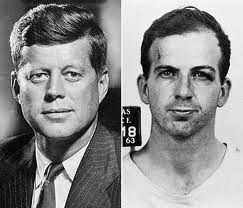
If you believe that Lee Harvey Oswald acted alone in assassinating John Kennedy, than any nut case with a mail-order rifle could get the President. It’s a short step from there to believing that anything could happen to anyone at anytime, even to ourselves.
Through acceptance of a conspiracy theory these occurrences may become more understandable and eventually controllable. Believing in a conspiracy may reinforce one’s sense of dignity as it helps a person to avoid feeling completely helpless. There may still be a slight hope that you could control your own destiny.
Conspiracy theories can be emotionally satisfying too. They can place events in an understandable context. The believer can blame a troubling event on a clearly identified group (one that he does NOT belong to). As a result, the person may excuse themselves of any moral responsibility for what bad things may happen to others.
WILL CONSPIRACY THEORIES ALWAYS BE AROUND?
Yes.
Conspiracy theory has been called “the ultimate refuge of the powerless.” That includes just about all of us.
Between World War II and the Kennedy assassination, conspiracy theories were mostly confined to two groups of people, neither of whom could bring their theories into the American mainstream. One group, the politically disaffected, minority groups and far right political factions had strong belief in political conspiracies, but had small followings. The other group was made up of people suspicious of authority and official explanations of events. The UFO believers would fall into this group. They had much more popular support, but no political agenda.
Belief in conspiracy theories took a giant leap forward during the 1960’s, spurred on by assassination of President Kennedy. There was a huge unfavorable response to the Warren Commission’s “official version” of the event, and their conclusion that Lee Harvey Oswald had acted alone.
Government by conspiracy has become the dominant and expedient explanation for political action. A broad cross section of the American public believes that at least some conspiracy theories are true. This fact has attracted sociologists, psychologists, and philosophers to take an interest in the subject.
Conspiracy theories, once limited to fringe organizations, now have become common in mass media. We are in the “golden age” of conspiracy theory.
Fusion Paranoia
Today, a new phenomenon has spread across America. It is the study of diverse groups merging around the one thing they have in common - they all support the existence of conspiracy theories. The term for it is “fusion paranoia” and it was first coined by the late Michael Kelly to explain how both left and right political wings adopt anti-government views.
Fusion paranoia includes people who are suspicious of authority, fearful of the rise of a new world order, worried about invasion of belligerent extraterrestrials, people involved in the occult and spiritualism, and people just seeking simple, black and white explanations for a confusing world.
Issues thought to be different, or at least existing in different spheres of society, have now migrated from one subculture to another. What is the means of transport? Well, it may be the fusing of conspiracy theories with the ubiquitous internet. Conspiricism has now reached a new audience, a worldwide audience.
Famous Real Conspiracies:
Watergate (1972)
A clear conspiracy; admitted by the conspirators themselves. It was proven to be a conspiracy on nationwide television.
The Holocaust / Final Solution (1938-1945)
This shows how a plot can involve many conspirators and be hidden from millions of people. The Allies in WWII didn’t learn of the concentration camps until 1945.
Turkish Genocide of Armenia (1910)
Denied for 100 years by the Turkish government, most people around the world absolutely believe that it happened.
Assassination of Lincoln (1865)
A clear conspiracy but . . . in the government’s haste to put the whole thing behind them, they tried and executed those members that were in custody, but probably let other conspirators get away.
Assassination of Adolph Hitler (1944)
Up to 200 high ranking NAZI and military officers secretly plotted to kill Hitler (several times) but ultimately failed and suffered severe consequences.
Operation Snow White (1970’s)
The Church of Scientology’s efforts to have 5,000 members infiltrate the Justice Department and other agencies. The conspiracy was exposed, arrests and convictions followed.
Operation Paperclip (1945-46)
Whitewashing the NAZI backgrounds of German nuclear scientists and rocket experts being brought to work in America; combined with the U.S. government’s effort to keep it all from the public.
There are many, many more known conspiracies in human history which proves that some are definitely true.
Below are some of the more famous conspiracy “theories” with a very short opinion of their validity.
Famous Conspiracy Theories:
Remember, a simple definition of a conspiracy theory is an important event whose accomplishment would be a result of an alleged plot by a covert group or individual whose motives are unknown to the general public. The theory may include a wide range of largely unrelated arguments and methodological flaws that describe an effort to steal something of value (freedom, power, or money) from the people.
High Believability
None. conspiracy theorists and their followers will vehemently deny this.
Medium High Believability - there is just enough there to worry about
Oil industry keeps vast supplies secret to maintain prices, illusion of scarcity
There is always suspicion about this. There are so many choke points in the delivery system of petroleum such as OPEC’s adjusting its output (that very few can understand) and the limited refining capacity downstream. Oh, and also the effect of world events determining the supply. Oil seems to be more of a pawn for governments than a real business.
Car makers keeping the electric car off the market
They auto industry contends that while the technology was there, the market wasn’t interested in electric cars. I guess the public was just interested in the high maintenance gas guzzlers, and liked to breathe in smog. This whole controversy is more likely tied up with maintaining the price of gasoline than the publics’ preferences.
The industrial/military coup to replace FDR (1933)
There is a lot of circumstantial evidence to support it, but just not enough to label it as fact. Denials were made by everyone who was thought to be involved and no action was ever taken by or against anyone. This could be Depression Era paranoia.
Medium Believability - a mix of logical theories with a lot of pervasive fabrication.
JFK assassination
This may go on forever because there are so many loose ends, and dead ends. The Warren Commission explanation was disbelieved by over 70% of Americans. The new Select Senate Committee Report (1977) gave life to the debate by concluding that Oswald did not act alone (by definition a conspiracy), although they couldn’t determine who he was working with. But even that conclusion has now been proven false as new audio evidence which refutes the sound of extra shots being fired. Because there are so many suspects and motives, we won’t have any consensus on this in our lifetime.
Influence of secret societies: (Illuminati/Freemasons/Skull and Cross Bones) Influence yes but have they created their New World Oder yet? No. That’s not to say that some of them won’t continue to try. It’s hard to keep a secret society secret long enough to accomplish their goals. What we might see going forward is pluralistic secret societies - ones that rise up here and there then shrink back before being a legitimate threat. (see New World Orders below)
Jesus and Mary Magdalene, married with children?
It was too long ago for any objective verification. The real conspiracy in this revolves around denials by the Catholic Church. What difference does it make today anyway?
Secret military projects
We know that the government has secret military projects; we have seen the results of them such as the Manhattan Project and stealth aircraft, to name just two. What conspiracy theorists seem to focus on are the alleged projects that put the test subjects or the public in danger.
FDR had advance warning of the Pearl Harbor attack
The U.S. government had broken the secret Japanese code long before the bombs fell. There were a lot of “warning signs” about an attack. But experts were never able to sort out which warning sign was real?
The New World Order
This may be the oldest conspiracy in human history. Since it has actually been attempted so many times in the past, it’s hard to discount it from happening again. This “group” of conspiracy theories may be the closest to reality and the hardest to disprove. There are so many candidates to choose from that each has to be examined separately (Communists, Zionist Conspiracy, Federal Reserve, U.N., Tri-Lateral Commission, Bilderberg Group and on and on).
Low Believability - lots of cover ups, sparse logic.
UFO cover-ups
This is not whether UFOs are real or not, that’s a theory; but whether or not the government covers up real evidence. Some people believe that the Project Blue Book records (now declassified) are faked. Close Encounters of the First and Second Kind (observation and physical evidence) are reported often. But Close Encounters of the Third through the Eight Kind, and their six sub-types, are few and evidence is more dubious.
Crop circles (this is actually part of Close Encounters of the Second Kind)
Again, this is not whether they are real or not, but whether they are covered up by the government. It’s hard to take them seriously when so many people have come forth to confess they did them, and demonstrated their methods. The little piece of doubt that exists is how very complicated designs could have been done during a single night.
The military is working with ET’s to abduct civilians
Abductions, Close Encounters of the Fourth Kind, haven’t been substantiated to begin with. Most researchers believe that people reporting abductions are really having an hallucination or a dreamlike event associated with their belief in ET’s. Unconscious and involuntary experiences are skeptical at best. And if the U.S. military was going to trade human test subjects for technology (as the story goes), why use American civilians at all? In the past, military personnel themselves have provided test subjects, and under better security.
AIDS is a manufactured disease (a genocide tool)
“I know the government administers AIDS” Kanye West’s lyrics of the song “Heard ‘em Say.” If transmission is principally by either blood transfusion or lifestyle choice, how does the government control either one? Why would they release a biological agent over which they have no control, then spend millions to find a cure for it?
There is a low level of suspicion of the medical profession in efforts to continue suffering, but there exists a greater lack of confidence in the pharmaceutical industry, from whom cures would generate. They control the research and, to some extent, the approval process of new drugs. But ultimately, they profit when the drugs are on the market. Would they develop drugs that maintain control of a disease but stop just short of a cure? You be the judge.
Hurricane Katrina: poor preparation and slow response was a U.S. government plot
Poor preparation, maybe. Slow response, yes. But it is not likely to be intentional. How can you control who the parameters of a disaster or who suffers? Also, who benefits? It’s hard to believe that the Army Corps of Engineers conspired to make faulty levees in 1927? Both political parties have been in power since then, but neither could direct the movement of a hurricane.
“I wouldn’t put anything past the U.S. Government when it comes to people of color. There is too much history” (Spike Lee). This is of course an implied conspiracy theory. But Spike, how about the other things the government has tried to “put past” African Americans like the Emancipation Proclamation, The 15th Amendment, Civil Rights Legislation, voting rights acts, . . .?
Global Warming
A classic example of “who benefits?” It has been claimed that scientists are putting forth this theory as a conspiracy to get more funding for their pet projects. It would be more efficient and cost effective to target specific potential catastrophes than such a nebulous topic as global warming. How do you get thousands of scientists to agree on and plan this without someone squealing? It just seems unmanageable as a conspiracy.
2010 Gulf Oil Spill was planned
Two words: “who benefited?” The coastal wildlife was devastated, people were out of work, BP paid a huge amount to compensate everyone. The amount of oil spilled had only a slight and temporary affect on market prices. If there is a conspiracy anywhere to be found in this, it might be that government regulators allowed oil companies to slide on safety measures. But that may change as new administrations take over.
Just Crazy - total fiction.
Faked Moon landings
Scientists put man on the Moon. If it was faked, the lead role would be our intelligence organization (remember secrecy), and they just don’t have what it takes to pull that off. Also, how were the 50,000 employees of NASA kept in the dark, and all those talkative astronauts too? Good fiction though.
The Holocaust didn’t happen
This is especially hurtful for the families of the millions who died. There are literally tens of thousands of stories, pictures, and confessions. Who could have coordinated such a wide spread ruse? No one. The Nazi’s had the motive, the means, and the opportunity.
911 Bombing was a plot by the US government
This is a prime example of “fusion paranoia.” It touches on so many conspiracy theories it’s hard to keep them straight. They include UFO’s appearing near the WTC, Nostradamus predicting the attack, Bush having advance warning of it, it was the start of the “end times,” and the illuminati planned the attack. Two predominant conspiracies involve how the towers collapsed and if the U.S. was bankrolling the attack.
Some contend that fire can’t melt steel? Of course it can, how do you think we can form it into different shapes? When steel is exposed to temperatures above 1100 degrees (think jet fuel), it can lose up to half of its strength. We shouldn’t get our physics/chemistry lessons from Rosie O’Donnell. Others contend the U.S. Government was funding Al-Qaeda; and Osama Bin Laden was working for the CIA. How did that work out for him?
Faked deaths (Andy Kaufman, Tupac Shakur, Michael Jackson, Elvis)
What would be the purpose of these high profile, publicity-oriented people to fake their own deaths if they were not planning to come back? So where are they? I guess just because we had their bodies doesn’t account for anything.
Obama’s birth certificate forgery
Who cares?
Death of Paul McCartney
We all believed this once upon a time. But we’ve only had forty years of Paul since he “died.” If he is a substitute, he may be better than the original. Come on.
The Denver Airport is part of an Illuminati New World Order plot
This is the most fun conspiracy theory around. Conspiracists contend that buildings were completed then buried, that there are eight levels of underground facilities, that the runways are laid out in the shape of a swastika, that illuminati inspired murals depicting genocide are on the terminal walls, and that the Freemason symbol is everywhere. It’s a conspiracy love fest. But everything (and we mean everything) has been debunked and proven not be anything like what some imagine. But it’s fun to read about it.
Scientologists are conspiring to discredit the Psychiatry profession
Scientologists openly criticize and denounce psychiatry. It’s not a secret. Some of them say psychiatry has even killed people. Whether you agree or not, this doesn’t make it a conspiracy, unless they claim the medical profession is conspiring to kill people.
A FINAL NOTE.
If you are suspicious of conspiracy theories, we recommend going to: